7 Signs Your Dog Has Anxiety (And What to Do About It)
Dog anxiety is more common than many pet owners realize.
Here are the most common signs to watch for—and what you can do.
1. Excessive Barking or Whining
Anxious dogs often use vocalization as a distress signal. Unlike a “territorial” bark at the mailman, anxiety-driven barking is often high-pitched, repetitive, and occurs when the dog is alone or senses a trigger is imminent. Whining is especially common in dogs facing separation anxiety as they “plead” for their owner not to leave.
2. Pacing or Restlessness
If a dog cannot settle down even after a long walk, they may be experiencing “anticipatory anxiety.” You might notice them walking a specific path repeatedly—such as from the window to the door—or circling their bed multiple times without ever actually lying down to rest.
3. Destructive Behavior
This is frequently seen in separation anxiety cases. Dogs may chew on doorframes, window sills, or personal items that smell like their owner. This isn’t “bad” behavior; it is a physical outlet for the intense panic they feel. In extreme cases, they may even attempt to dig through carpets or scratch at exit points.
4. Hiding or Avoidance
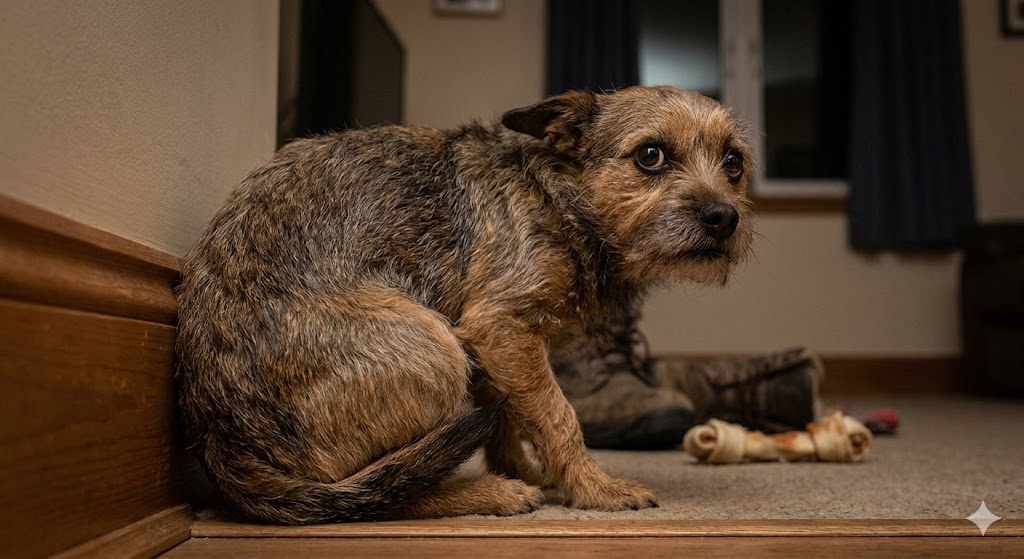
Some dogs react to stress by trying to become invisible. They may retreat behind a sofa, under a bed, or into a dark closet. If your dog suddenly “disappears” when guests arrive or during a storm, they are seeking a self-imposed safe zone to lower their sensory input.
5. Accidents Indoors
Even a perfectly house-trained dog may have accidents when they are terrified. Anxiety causes a loss of bladder or bowel control due to the “fight or flight” response. If you find accidents specifically near the door where you depart, it is a hallmark sign of distress rather than a lack of training.
6. Trembling or Shaking
Visible shivering or “shaking it off” (like they just got wet) are clear physical manifestations of stress. This often happens during loud events like fireworks. The shaking is the body’s way of processing the massive spike in adrenaline and cortisol that occurs when they feel threatened.
7. Trouble Sleeping
An anxious dog is rarely a deep sleeper. They may startle at the slightest floorboard creak or constantly shift positions. This lack of restorative sleep can create a cycle of irritability and heightened sensitivity, making them even more prone to anxiety the following day.
What Causes Dog Anxiety?
Common triggers include:
- Separation: Being left alone for long periods can cause distress in many dogs.
- Loud noises: Fireworks, thunderstorms, or construction can trigger fear.
- Changes in environment: Moving to a new home or adding a new family member.
Understanding the Deep Roots of Anxiety
While immediate triggers like a thunderstorm or a vacuum cleaner are easy to spot, dog anxiety often stems from a complex mix of genetics, past experiences, and physiological factors. For many dogs, anxiety isn’t just a fleeting moment of fear; it is a sustained state of hyper-vigilance.
The Role of Early Socialization A dog’s “critical socialization period” typically occurs between 3 and 14 weeks of age. If a puppy isn’t exposed to a variety of people, sounds, and environments during this window, they may grow up to view the world as a threatening place. This lack of exposure can lead to generalized anxiety, where the dog feels uneasy even in seemingly normal situations.
Past Trauma and Rescue Histories For many rescue pets, anxiety is a lingering shadow from their past. Previous abandonment, time spent in crowded shelters, or a history of neglect can wire a dog’s nervous system to remain in a “fight or flight” mode. These dogs often struggle with Separation Anxiety, fearing that every time their owner picks up their keys, they are being left forever.
Age-Related Cognitive Decline Much like humans, senior dogs can develop anxiety as they age. This is often linked to Cognitive Dysfunction Syndrome (CDS). As a dog’s memory, sight, and hearing begin to decline, the world becomes a confusing and unpredictable place. This can lead to nighttime restlessness, confusion, and a sudden onset of separation distress that wasn’t present in their younger years.
The Genetic Component Finally, it is important to realize that some dogs are simply predisposed to being more “anxious” than others. Certain breeds or individual bloodlines may have a lower threshold for stress. Understanding that your dog’s anxiety might be partially biological can help you approach their care with more patience and empathy, focusing on long-term management rather than a quick fix.
What You Can Do
Helping an anxious dog requires a multi-layered approach. Fortunately, small environmental changes often lead to significant improvements in their behavior.
- Create a Dedicated Safe Space: Specifically, set up a quiet corner where your dog can retreat when they feel overwhelmed. This area should include a familiar, high-quality bed that provides a sense of enclosure. Because scent is so important to dogs, adding an unwashed t-shirt of yours can provide extra comfort while you are away.
- Establish a Predictable Routine: Dogs thrive on consistency. Therefore, try to keep feeding, walking, and bedtime at the same time every day. A predictable schedule reduces “anticipatory anxiety,” as your pet will always know what to expect next.
- Utilize Mental Stimulation: In addition to physical exercise, use puzzle toys or licking mats to keep their minds busy. Consequently, focusing on a task helps lower their heart rate and distracts them from external stressors like loud noises or visitors.
- Invest in Quality Comfort: Since your dog spends over half their life sleeping, their rest environment is critical. Unlike mass-produced options, our Luxury Calming Beds are designed with raised bolsters that mimic a “den” feel. Furthermore, choosing non-toxic materials ensures they aren’t breathing in harsh chemicals while they try to relax. At The Modern Pet, we prioritize safety. Unlike mass-produced imports that may contain chemical fillers, our Luxury Calming Beds are crafted in the USA with non-toxic materials. Therefore, you can rest easy knowing your pet’s sanctuary is free from harmful off-gassing.
- Identifying the signs is only the first step. To see real progress, consistency is key. We’ve put together a step-by-step guide on how to create a calming routine for your dog that works with your schedule and your pet’s unique needs.
Comfort Matters More Than You Think
While a routine is essential, the physical environment where your dog rests plays a vital role in their emotional state. In fact, many pet owners underestimate how a low-quality bed can contribute to physical restlessness, which eventually mirrors mental anxiety.
- Supportive Joint Health: Specifically, older dogs or those with minor joint issues may struggle to settle in beds that lack proper structure. As a result, they pace more frequently and have trouble entering a deep sleep. Our Luxury Calming Beds utilize high-density foam that contours to their body, relieving pressure points and promoting a calmer physical state.
- The “Denning” Instinct: Furthermore, anxious dogs naturally seek out enclosed spaces where they feel protected from “predators” (even if those predators are just the vacuum cleaner). The raised bolsters on a high-quality donut bed provide a physical barrier. Consequently, your dog feels “hugged” from all sides, which naturally lowers their cortisol levels.
- Safety from Harsh Chemicals: Unlike many budget-friendly options found in big-box stores, our beds are made without toxic flame retardants or heavy metals. Therefore, you aren’t just providing a soft place to land—you are ensuring their long-term health by providing a chemically safe sanctuary.
When to Seek Help
If anxiety is severe or worsening, it’s best to consult a veterinarian or trainer.
Final Thoughts
Recognizing the signs early allows you to support your dog before anxiety becomes more serious.
Small changes can make a big difference.

Disclaimer: This post contains affiliate links to our curated collections. If you make a purchase through these links, we may earn a small commission at no extra cost to you, which helps support our mission to help animals in need.