Why “Made in USA” Matters for Your Pet’s Safety (And What to Look for When You Shop)

In 2025, over 166,000 pounds of pet food were recalled in the United States — most due to bacterial contamination or foreign material that slipped through production. And that’s just food. For pet toys and accessories, there are virtually no federal safety standards at all. Pet product safety and why buying American-made matters. What’s protecting your pet often comes down to where their products are made — and how.
If you’ve ever assumed that the squeaky toy or plush bed you picked up at the pet store went through rigorous safety testing before hitting shelves, you’re not alone. Most pet owners assume exactly that. The truth is more complicated — and more alarming — than the label suggests.
The Pet Product Recall Problem: What the Data Actually Shows
The scale of pet product recalls in recent years should give every pet owner pause. In 2025 alone, Salmonella contamination accounted for more than 157,000 of the 166,071 pounds of pet food recalled. Metal fragments from worn manufacturing equipment turned up in multiple kibble brands. Vitamin D toxicity — caused by simple formulation errors — forced recalls that put dogs at risk of kidney failure.
And 2025 wasn’t unusual. Between 2018 and 2026, the FDA issued repeated advisories against a single raw pet food brand for contamination — appearing on the agency’s advisory list six or more times across eight years.
These recalls don’t announce themselves to pet owners. They show up quietly on government websites. A single contaminated ingredient batch can ripple across dozens of brands produced at the same manufacturing facility, because much of the pet food industry runs on shared production infrastructure. By the time a recall is issued, the food has often been in homes — and in pets — for weeks.
The recall problem is real and ongoing. But food is only part of the picture.
What’s Actually in Imported Pet Toys — and Why It Matters
Here’s the part that surprises most people: there is no federal law that specifically governs the safety of pet toys. The Consumer Product Safety Commission, which exists to protect people from dangerous consumer products, has never recalled a pet toy for being hazardous to a pet. Its jurisdiction applies only when a product poses danger to humans. The FDA does not regulate pet accessories, toys, beds, crates, or grooming aids.
That regulatory gap has real consequences — especially for products manufactured overseas with limited oversight.
Researchers and safety advocates have found that many plastic and vinyl pet toys contain a cocktail of chemicals that would be concerning in any context:
Phthalates are added to PVC plastic to make it flexible and chewable. They’ve been linked to liver damage, kidney damage, and reproductive harm in dogs. A Danish study found that two types of phthalates made up between 10% and 54% of the content of some vinyl dog toys tested. In the US, phthalates like DEHP have been banned from certain children’s products — but not from pet products.
BPA (bisphenol A) is used to strengthen phthalates and prevent them from breaking down. Research has linked BPA exposure in dogs to changes in gut microbiome and metabolism, and it has been associated with increased cancer risk. Studies show that the chewing action of dogs causes significant amounts of BPA to leach directly from toys into a dog’s system.
Lead has been found in Chinese-made pet toys at levels that concern toxicologists. Consumer testing has detected it in painted or plastic toys sold at major retailers. Lead causes nerve damage and cognitive problems, and there is no safe exposure level for dogs or humans.
Chromium, arsenic, formaldehyde — these heavy metals and compounds have all been detected in imported pet products. They’re invisible to the naked eye and odorless. Without third-party testing, there’s no way for a consumer to know they’re present.
Dogs interact with their world through their mouths. A child’s toy gets chewed on occasionally. A dog’s toy gets chewed, soaked in saliva, and pressed against gums for hours a day. The exposure routes are more direct, more sustained, and more serious than the product labels would ever suggest.
This doesn’t mean every imported product is dangerous. But without regulatory requirements forcing manufacturers to test for these substances, the responsibility falls entirely on the brand — and on you.
How US Manufacturing Standards Are Different
American-made doesn’t automatically mean safe. But manufacturing in the United States does come with meaningful differences in oversight, accountability, and supply chain transparency that matter for pet product safety.
FDA manufacturing inspections. For pet food and treats, US-based manufacturers operate under FDA jurisdiction and can be inspected for compliance with Current Good Manufacturing Practice (CGMP) regulations. Foreign facilities that export to the US are subject to far less frequent inspections — and language barriers, geographic distance, and diplomatic complexity make enforcement difficult.
Supply chain visibility. When a product is made domestically, it’s far easier to trace ingredients and materials back to their source. American manufacturers are more likely to know exactly where their raw materials come from, work directly with domestic suppliers, and be able to respond quickly when something goes wrong. Imported products often pass through multiple countries and intermediaries before reaching a US shelf, with ingredient sourcing that’s difficult to verify.
Accountability and legal exposure. US-based companies are subject to American consumer protection laws and tort liability. They have a direct reputational and financial stake in the safety of what they produce. That doesn’t guarantee perfection — US companies have recalls too — but it creates stronger structural incentives to maintain quality control.
Craftsmanship and material selection. Domestic luxury manufacturers, in particular, tend to select materials based on quality and longevity rather than cost minimization. That means fewer synthetic chemicals, more natural and traceable materials, and products built to last rather than to be replaced.
None of this is a guarantee. But it’s a meaningful difference in baseline accountability.
What to Ask Before You Buy Any Pet Product
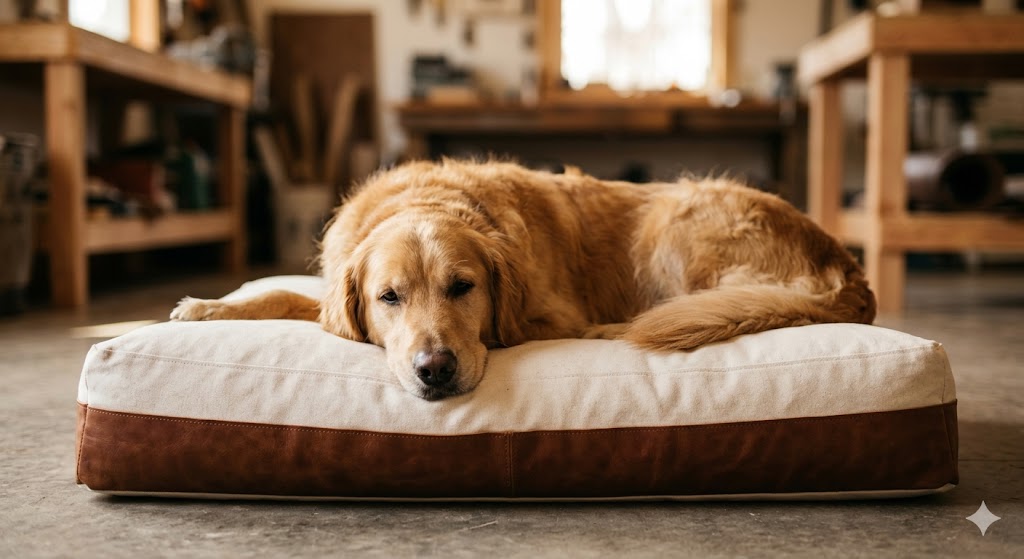
Before adding any pet product to your cart — especially toys, bedding, and accessories — here’s a practical checklist:
Where is it made? Look beyond “Designed in USA” or “Assembled in USA.” True domestic manufacturing means the product is built here, with materials sourced and fabricated in the US.
What materials does it contain? For toys: does the manufacturer disclose whether it’s PVC/vinyl-free, phthalate-free, BPA-free, and lead-free? For bedding: is the foam CertiPUR-US certified? Is the fabric OEKO-TEX or GOTS certified? If a brand can’t answer these questions, that’s informative on its own.
Has it been third-party tested? Self-reported safety claims mean less than independent laboratory testing. Ask if the brand can share test results.
Does it smell like chemicals? A strong chemical or “new car” smell from a plastic or vinyl product is often phthalates off-gassing. Trust your nose. If it smells like a factory, put it back.
Is the brand on the FDA recall database? You can search the FDA’s pet product recall list at fda.gov/animal-veterinary. A single recall can happen to any brand. Repeated appearances are a red flag worth taking seriously.
Does it have hardware, paint, or dye? Metal clasps, painted surfaces, and fabric dyes are all potential sources of heavy metals. Ask specifically about lead and chromium testing if a product has these components.
Why We Curate Everything in the USA
We started curating pet products in the USA because we believe the people who love their pets most deserve to know exactly what they’re buying — and we weren’t satisfied with what we found when we looked at the alternatives.
Every product we source is made in the USA, with materials we’ve selected for their safety, durability, and comfort. We work with domestic suppliers we’ve vetted personally.
There are cheaper options out there. We know that. But we also know that “cheap” has a way of costing more in the long run — in vet bills, in worry, and in trust.
The Bottom Line
The pet product industry is large, fast-growing, and largely self-regulated when it comes to toys, accessories, and bedding. That means the burden of making safe choices falls heavily on you as the buyer.
Where a product is made, what certifications it carries, and whether the brand can answer direct questions about materials and testing — these are the signals that matter. A “Made in USA” label from a brand with genuine transparency isn’t just a feel-good purchase. In a market with limited federal oversight, it’s one of the most reliable indicators of quality and safety available.
Your pet trusts you to choose well. We’re here to make that easier.
Browse our full collection of American-made [luxury pet products] → TheModernPetUSA.com
Have a question about what’s in our products? We’ll answer it directly — just reach out.